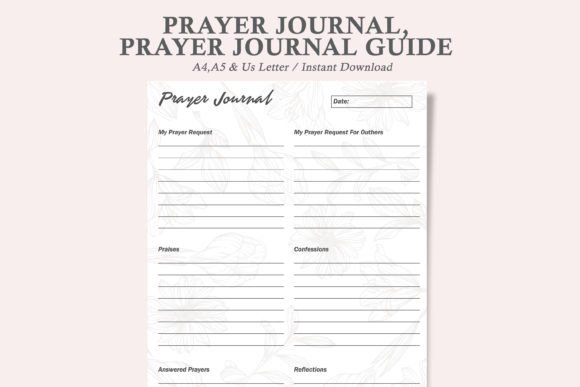
Prayer Journal Guide: Deepen Your Spiritual Practice
If you’ve ever felt that your prayer life could use more structure or depth, you’re not alone. Many people turn to a prayer journal as a simple yet powerful tool to bring intention and clarity to their spiritual routine. But starting one—or improving an existing practice—often benefits from a thoughtful prayer journal guide. This article explores what makes a prayer journal meaningful, how to use it in everyday life, and practical tips to get the most out of the experience.
What Exactly Is a Prayer Journal and Why Use One?
A prayer journal is a dedicated space where you record your conversations with God—your thanks, requests, worries, and reflections. It goes beyond a simple diary because it centers on spiritual growth and connection. A prayer journal guide typically offers prompts, structures, or frameworks that help you stay consistent and focused. For example, you might find sections for gratitude, intercession, confession, and listening. This structure turns an abstract concept into a daily habit.
Why is this useful? The simple act of writing forces you to slow down and articulate what’s on your heart. Over time, that clarity reduces anxiety, builds self-awareness, and helps you see patterns—both in your life and in how you perceive answers to prayer. For adults balancing careers, creative projects, and personal growth, a prayer journal becomes a portable anchor in a busy world.
Key Characteristics of an Effective Prayer Journal Guide
Not all prayer journals are created equal. What separates a helpful guide from a forgettable notebook? Look for these strengths:
- Flexibility: A good guide provides a loose structure without being rigid. Some days you may want to write pages; other days only a few lines. The best guides accommodate both.
- Prompts that promote depth: Questions like “What did I learn about God today?” or “Where did I see evidence of grace?” push you beyond surface-level entries.
- Room for listening: Prayer isn’t just talking. A quality journal includes space to write down what you sense God is saying or showing you.
- Durability and portability: If you use a physical journal, it should open flat and feel good in your hands. Digital versions need offline access and privacy features.
These characteristics ensure that your prayer journal guide serves as a companion rather than a chore.
Practical Applications Across Different Areas of Life
A prayer journal isn’t limited to Sunday mornings. Its applications reach into professional, educational, and creative spheres.
Personal and Mental Well-being
Start your day with a five-minute entry. List three things you’re grateful for and one request weighing on your mind. Over weeks, you’ll notice a shift in perspective. Many users report feeling more grounded and less reactive to stress. For those dealing with grief or uncertainty, a prayer journal offers a safe place to process emotions honestly.
Professional and Entrepreneurial Settings
Entrepreneurs, freelancers, and business owners often face high stakes and isolation. Incorporate a prayer journal into your morning routine to align priorities with your values. Write down decisions you’re wrestling with, then revisit entries later to see how circumstances unfolded. This habit builds discernment and reduces second-guessing. Some professionals even use a shared digital prayer journal within teams to foster mutual support—though with clear boundaries around privacy.
Educational and Creative Environments
Teachers, students, and lifelong learners can use a prayer journal to connect learning with spiritual growth. A teacher might pray over lesson plans; a student may journal about insights from lectures. Creatives—writers, bloggers, designers, marketers—find that journaling before brainstorming opens up fresh ideas. The act of writing freely bypasses inner critics and unlocks intuitive connections that benefit commercial projects or personal art.
Digital and Commercial Use
Digital prayer journal apps like Day One or Journey integrate reminders, photos, and search capabilities. For bloggers and content creators, a prayer journal can serve as source material for thoughtful posts or newsletters. Businesses that value whole-person support might offer a branded prayer journal guide as a free resource for employees or clients, enhancing engagement and showing authentic care. The key is adapting the format to your environment without losing the spiritual core.
How a Prayer Journal Enhances Usability and Engagement
The design and format of your prayer journal guide directly affect how often you use it. A well-designed journal reduces friction. For instance, a guided layout with dated entries removes the question “What do I write?” Beautiful typography and space between lines make the experience pleasant rather than intimidating. Digital versions with passcode protection and cloud backup give peace of mind.
When you find a journal that feels right, engagement increases naturally. You look forward to those quiet moments. Some journals include weekly reviews or monthly reflections, which deepen the sense of progress. This is especially helpful for busy adults who need visible proof that their spiritual life is moving forward, even if slowly.
Real-World Examples and Recommendations
Consider Mark, a marketing consultant in his forties. He used to pray sporadically, feeling guilty when he missed days. After adopting a structured prayer journal guide with morning and evening prompts, he found consistency. He now uses a leather-bound notebook with four sections: gratitude, requests, lessons, and listening. Within three months, he noticed increased calm before client meetings and a clearer sense of direction for his business.
Another example is Sara, a freelance writer and mother of two. She uses a digital prayer journal on her phone because it’s always with her. She sets a reminder at lunchtime and jots down one sentence of thanks and one request. Despite limited time, she never skips more than a day. The guide she chose includes weekly reflection prompts that help her see how her prayers have evolved. She often pastes snippets into her blog as authentic testimonials, which resonates with her audience.
For those starting out, I recommend a simple approach: pick a journal with at least one prompt per day and commit to two weeks. After that, adjust the format to suit your rhythm. The goal is not perfection but connection.
Practical Considerations When Starting or Improving Your Prayer Journal
Before you invest in a beautiful journal or app, think about these factors:
- Frequency vs. quality: It’s better to write for three minutes daily than thirty minutes once a week. Set a realistic minimum.
- Privacy: Especially if you live with others, a locked drawer or a password-protected app respects your vulnerability.
- Guided vs. free-form: If you thrive on structure, buy a prayer journal guide with daily prompts. If you prefer creative flow, a blank notebook might work better. Hybrid options exist.
- Review your entries: Every quarter, read through past entries. You’ll spot answered prayers and personal growth that you otherwise might overlook.
- Don’t let the tool become the focus: The journal is a means, not an end. If you spend more time choosing the perfect pen than actually writing, simplify.
Finally, remember that a prayer journal is a personal conversation. There’s no wrong way to keep one as long as it draws you nearer to your faith and helps you live more intentionally. Whether you’re a busy professional, a creative entrepreneur, or an educator shaping young minds, a prayer journal can be the quiet practice that anchors your entire day.