Happy Easter Coloring Pages for Kids: A Creative Asset for Spring Projects
If you have ever tried to keep a room full of children occupied while simultaneously preparing for a holiday, you already know the value of a good coloring page. Happy Easter Coloring Pages for Kids fits that niche perfectly. It is not just another set of printable activities. It is a curated collection of illustrations that balance seasonal charm with practical usability. Whether you are a parent looking for a quiet afternoon activity, a teacher assembling a spring lesson plan, or a small business owner creating a branded Easter giveaway, these pages offer real versatility.
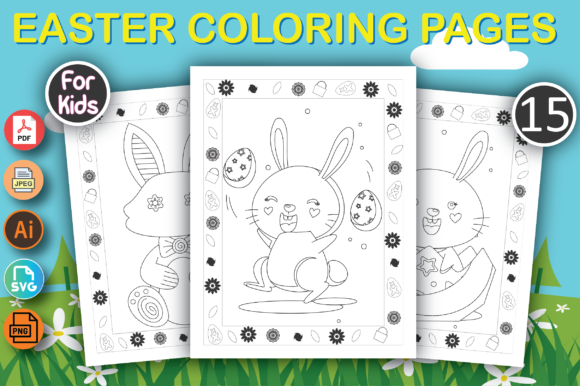
Visually, the style leans toward clean, friendly line art with enough detail to engage older children but not so much that a preschooler feels overwhelmed. The illustrations typically feature bunnies, eggs, chicks, baskets, and spring flowers, all rendered with open spaces and distinct outlines. This makes them ideal for crayons, markers, or even watercolor pencils. The personality is warm and approachable. There is no overly complex shading or fussy decorative elements. Instead, the focus is on recognizable shapes that invite a child to pick up a coloring tool and start immediately. That directness matters when your audience is young and your time is limited.
Where These Coloring Pages Shine Across Projects
From a practical standpoint, Happy Easter Coloring Pages for Kids works well in a surprising range of settings. For bloggers and content creators, these pages can serve as lead magnets, freebies attached to a newsletter signup, or printable bonuses within a spring-themed post. They offer immediate value without requiring a significant download or complicated unlock process. That low friction often leads to higher conversion rates.
For small business owners, particularly those running Etsy shops or print-on-demand storefronts, these coloring pages can be bundled into larger activity packs, sold as individual digital downloads, or even printed and sold as physical booklets at local markets. The clean line art reproduces well on standard printer paper, so production costs stay low while perceived value remains high. Marketers and brand strategists might also use these pages as part of an Easter campaign, offering them as a free incentive with a purchase or as an engagement tool on social media. A simple prompt like "color this bunny and tag us" can generate surprising organic reach during the holiday season.
Publishers and designers working on children's activity books will appreciate the consistency across the illustrations. Each page maintains a similar visual language, which matters when you are compiling a 40-page book and need the spreads to feel cohesive. The line weight is consistent, the subject matter stays on theme, and the compositions leave room for text if you are adding instructions, prompts, or branding elements.
How Coloring Pages Influence Engagement and Readability
When we talk about typography or design assets, we often discuss visual hierarchy and brand perception. Coloring pages operate differently, but the principles are similar. The way line weight varies across an illustration determines how a child interacts with the page. Thicker outlines provide clear boundaries for younger kids who are still developing fine motor control. Thinner lines add detail for older children who want a more intricate experience. Happy Easter Coloring Pages for Kids strikes a thoughtful balance here. The main subjects use bolder lines, while secondary elements like grass blades or flower petals use lighter strokes. This creates a natural reading order for the image, guiding the child's eye from the main character to the surrounding details.
From a brand perspective, using a consistent set of coloring pages across your materials builds recognition. If you are a children's brand or a family-focused business, offering these pages as part of your email marketing or as a in-store activity reinforces your identity as being kid-friendly and thoughtful. It is a subtle but effective way to show that you understand your audience's needs. The professionalism here comes not from complexity but from reliability. Parents and teachers do not want to hunt for usable content. They want something that prints cleanly, looks appealing, and keeps children engaged. These pages deliver on that expectation.
In terms of audience engagement, coloring pages remain one of the most effective offline tools for digital brands. They bridge the gap between screen time and hands-on creativity. A child who colors a page that features your logo or your mascot builds a small but meaningful connection to your brand. That connection often leads to parents sharing photos of the finished work on social media, which gives you authentic user-generated content without any heavy lifting on your part.
Practical Guidance for Choosing and Using These Pages
Before you commit to any coloring page set for a project, consider the age range of your primary audience. Happy Easter Coloring Pages for Kids tends to suit children between three and eight years old, but the specific illustrations vary. Look at the line detail levels. If your audience skews younger, choose pages with large, simple shapes and minimal small spaces to color. If you are targeting early elementary ages, pages with more intricate patterns and multiple elements will hold their attention longer.
Print testing is another step that many creators skip but should not. What looks crisp on a screen can appear muddy on a home printer or too light when printed in grayscale. Always print a sample page on the paper you plan to use. Standard copy paper works fine for most applications, but cardstock or heavier paper prevents bleed-through if kids are using markers. If you are selling digital downloads, include a note about recommended paper types. It is a small detail that builds trust with your customers.
When it comes to packaging these pages into a product, think beyond just the coloring activity. You can pair the pages with a simple prompt, such as "What would you name this Easter bunny?" or "Draw a flower next to the egg." This turns a passive activity into a more engaging creative exercise. Teachers especially appreciate this approach because it combines art with language development. If you are a blogger or content creator, you might offer a bundle that includes the coloring pages plus a short story or an Easter-themed word search. The added value costs you almost nothing but increases the perceived worth of your freebie or product.
Licensing is another consideration. If you plan to use these pages for commercial purposes, such as in a paid product or as part of a client project, verify the terms. Many coloring page sets come with a personal use license only. Commercial usage requires explicit permission or a separate license. Review the included usage rights before distributing anything beyond a personal context. This is one area where skipping the fine print can cause headaches later, especially if you are a designer or publisher reselling the work.
Design Observations and Recommendations
From a design perspective, one of the strongest aspects of Happy Easter Coloring Pages for Kids is the negative space management. The illustrations leave enough white space around the main subjects so that the printed page does not feel cluttered. That matters for young children who can get visually overwhelmed. It also matters for you if you plan to add text, borders, or branding elements around the illustration. The generous margins give you room to work without fighting the art.
Colorists often respond well to pages that offer a mix of large areas and small details. A page with a large bunny surrounded by tiny eggs and flowers keeps a child interested because they can color the big area quickly and then spend extra time on the small accents. That pacing helps extend the activity's duration, which is exactly what parents and teachers are looking for. If you are curating a set, include a variety of these compositions rather than a uniform layout. Variety prevents boredom and gives kids a sense of discovery as they move from page to page.
For social media graphics or digital previews, consider showing a finished colored example. A fully colored page looks far more appealing than a black-and-white line drawing. It gives potential users a clear vision of what the final result can look like. If you are not confident in your own coloring skills, ask a child to color a sample, or use digital coloring tools to create a polished version. That single image often makes the difference between someone scrolling past and someone clicking to download.
One final recommendation: if you are using these pages as part of a marketing campaign, time your release carefully. Easter content has a relatively short window of relevance. Mid-March to early April is the sweet spot. Releasing too early means the holiday is not on people's minds. Releasing too late means they have already made their plans. A well-timed launch with a clear call to action, such as "Download your free Easter coloring pack," can capture attention when interest is peaking. Pair it with a simple email sequence or social media schedule, and you have a low-lift campaign that delivers consistent engagement throughout the season.
Ultimately, Happy Easter Coloring Pages for Kids serves as more than just a seasonal activity. It is a reliable design asset that works across digital and print, for personal use and commercial projects alike. Its clean line art, thoughtful compositions, and kid-friendly subject matter make it a practical addition to any creator's toolkit. Whether you are building a brand, publishing a book, or simply looking for a way to make this Easter a little more creative, these pages deliver exactly what you need without pretending to be anything else. That honesty is rare, and it is worth holding onto.