Hebrew Letters Handlettered Abba Father: A Guide to the Craft and Meaning
There is a quiet power in seeing ancient letters form the most intimate of names. When I first encountered a piece of art inscribed with Hebrew Letters Handlettered Abba Father, I felt an immediate pull—not just from the beauty of the script, but from the weight of the words. Abba, an Aramaic term for father, carries the warmth of a child’s trust. Pair it with the elegance of Hebrew calligraphy, and you get something far more than typography: you get a visual meditation.
This article walks through what Hebrew Letters Handlettered Abba Father actually is, why it matters, and how you might use it in your own projects, whether you’re a creator, a business owner, or someone looking for meaningful design. No unnecessary jargon—just practical insight.
What Are Hebrew Letters Handlettered Abba Father?
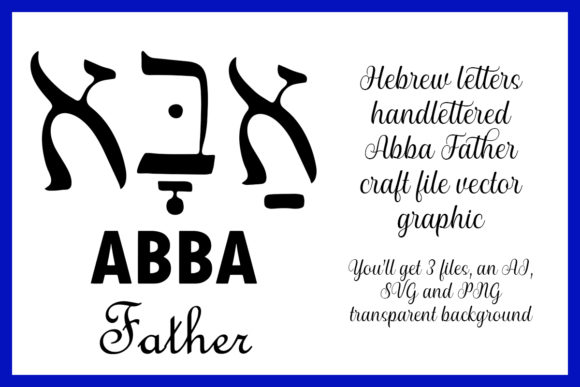
At its simplest, Hebrew Letters Handlettered Abba Father refers to artwork, typography, or design that combines the Hebrew script (the letters aleph, bet, etc.) with the phrase “Abba Father” rendered by hand. The phrase itself is biblically resonant—Abba appears in the New Testament as a term of intimate address to God. Handlettering elevates it from mere text to a crafted expression, with each stroke reflecting the artist’s personal touch.
This isn’t a standard font you download. Each piece is unique. The curves of the bet or the flourish on the aleph may vary, giving the work a tactile, human quality. The result is something that feels both ancient and alive.
Breaking Down the Elements
- Hebrew Script: The letters are drawn from the Hebrew alphabet, often using square script or cursive styles. Even if you don’t read Hebrew, the shapes carry a visual rhythm.
- Handlettered: Unlike typed text, handlettering involves pen, brush, or marker. Slight irregularities in line weight add character.
- Abba Father: The phrase can be written in Hebrew (אבא אב) or sometimes transliterated. The combination of the Aramaic “Abba” and English “Father” bridges two languages.
Why Choose Handlettered Hebrew for “Abba Father”?
The value of Hebrew Letters Handlettered Abba Father lies not just in aesthetics, but in meaning. For many, this phrase is a central spiritual anchor. Handlettering transforms it into a daily reminder—on a wall, a journal cover, or a digital wallpaper.
From a design perspective, Hebrew script offers structural beauty. Its right-to-left flow, ascenders, and descenders create a balanced composition. When done by hand, the lettering feels organic, not sterile. This is why so many artists and ministries gravitate toward this specific style.
Real-World Applications
Where might you encounter Hebrew Letters Handlettered Abba Father? Here are a few common scenarios:
- Home Decor: Framed prints or canvas art in living rooms, prayer corners, or nurseries. The script adds a calm focal point.
- Gift Items: Bibles, journals, mugs, or tote bags. A handlettered phrase makes a gift feel personal and thoughtful.
- Social Media Graphics: Instagram posts and YouTube thumbnails for faith-based content. The distinct style helps a message stand out.
- Branding: Logos for churches, nonprofits, or Christian-owned businesses. Hebrew letters communicate heritage and authenticity.
- Bible Journaling: Many enthusiasts use handlettering to illustrate verses. “Abba Father” is a frequent choice for its emotional depth.
Practical Considerations and Limitations
While Hebrew Letters Handlettered Abba Father has wide appeal, it’s not a one-size-fits-all solution. Let’s look at the strengths and a few things to keep in mind.
Strengths
- Emotional Resonance: The phrase itself is deeply personal. Handlettering amplifies that by showing care in every line.
- Visual Uniqueness: No two handlettered pieces are identical. This works well for limited-run products or custom commissions.
- Cultural Authenticity: Using actual Hebrew script (rather than a transliteration in Latin letters) feels more grounded for those familiar with the language.
Considerations and Limitations
- Legibility: Highly decorative handlettering can be hard to read, especially for non-Hebrew speakers. Balance is important.
- Sensitivity: Hebrew is a sacred language for many. Using it casually or incorrectly can feel disrespectful. Always verify the accuracy of the script.
- Scalability: Handlettered originals don’t scale well for mass production unless digitized. If you need thousands of identical pieces, a font might be more practical.
- Cost: Commissioning a custom handlettered piece can be more expensive than using stock graphics. Quality handletterers charge for time and skill.
Who Benefits Most From This Style?
Not everyone needs Hebrew Letters Handlettered Abba Father. But if you fall into one of these categories, it’s worth exploring:
- Faith-Based Creatives: Artists, designers, and writers who want to infuse their work with spiritual depth.
- Small Business Owners: A boutique gift shop or a Christian bookstore could use this style for product lines or signage.
- Event Planners: Weddings, baptisms, or dedications often incorporate meaningful phrases. This design adds elegance.
- Personal Enthusiasts: Anyone who enjoys Bible journaling or custom home decor will appreciate the personal touch.
- Educators & Pastors: Teaching materials or sermon slides can use handlettered Hebrew to visually anchor a lesson on divine intimacy.
How to Evaluate Suitability for Your Project
Before committing to Hebrew Letters Handlettered Abba Father, ask yourself a few practical questions:
- What is the context? For a private journal, any style works. For a public brand, consider how your audience will perceive Hebrew script.
- How will it be reproduced? If you need digital files for a website, ask for a high-resolution scan. For print, vector formats are ideal.
- Is accuracy crucial? Always have someone who reads Hebrew double-check the calligraphy. One misplaced stroke can change the meaning.
- What tone do you want? Loose, playful handlettering feels different from formal, rigid script. Choose an artist whose style matches your project.
When I sourced a handlettered piece for a friend’s new ministry, I specifically looked for an artist who specialized in Hebrew Letters Handlettered Abba Father. The result was a logo that felt both timeless and intimate—exactly what they needed.
A Closer Look at the Handlettering Process
Understanding how these pieces are made can help you appreciate the work—and set realistic expectations. Most artists begin with a pencil sketch, often working on paper with guidelines to keep the Hebrew letters proportional. Then they ink with brush pens, nibs, or markers. Some add watercolor washes or metallic highlights. The final piece may be scanned and edited for digital use.
Because each letter is drawn by hand, small variations are part of the charm. That tiny wobble in the yod? That’s the artist’s presence. For many collectors, that imperfection is exactly what makes Hebrew Letters Handlettered Abba Father feel genuine.
Digital vs. Analog Handlettering
Some designers create handlettered work on tablets using styluses. This offers undo functionality and easy sharing, but may lack the texture of ink on paper. If you value tactile authenticity, go analog. If you need quick turnaround and editability, digital handlettering is a solid alternative. Both can produce beautiful Hebrew Letters Handlettered Abba Father art.
Examples of Effective Use
Let’s look at a few scenarios where this style shines.
- A Wedding Invitation: A couple wants to include a bilingual element: the English “Abba Father” alongside the Hebrew. A handlettered design ties both scripts into a unified layout. It’s simple but meaningful.
- A Church Logo: A local congregation desires a visual identity that connects them to the early Christian community. Using Hebrew Letters Handlettered Abba Father in the logo communicates roots and warmth.
- A Devotional Cover: A self-published devotional on prayer uses the phrase on the cover. The handlettering sets the tone—gentle, personal, reflective.
Final Thoughts on Hebrew Letters Handlettered Abba Father
As with any specialized art form, the key is intention. When you choose Hebrew Letters Handlettered Abba Father, you’re not just picking a style; you’re inviting a tradition—a language of faith and a craft of patience. Whether you commission a piece for your living room, create one yourself, or incorporate it into a brand, the effect can be quietly profound.
I still recall the first time I held a handlettered print of the phrase. The ink had a slight sheen, the aleph leaned just a bit forward, and the word Abba seemed to breathe. That’s the power of someone’s hand shaping sacred letters. If that resonates with you, exploring Hebrew Letters Handlettered Abba Father could be a rewarding journey—whether for your own soul or for the people you serve.
For more on the artistry behind Hebrew calligraphy, consider studying the work of contemporary scribes or visiting a local lettering workshop. The community around this craft is welcoming, and many share their process online. Learn more about handlettering techniques and Hebrew script basics to take your first step.