Faith Hope Love SVG, Heart SVG, and Faith SV: Practical Vector Assets for Real Design Workflows
When you work with vector design files on a regular basis, you quickly learn that not all SVG assets are created equal. Whether you run a small print-on-demand business, design social media graphics for clients, or craft gifts and signage for local events, the quality and organization of your vector assets directly affect how smoothly your projects run. Faith Hope Love SVG, Heart SVG, and Faith SV are three specific types of vector graphics that many creators and small business owners rely on. But understanding what they are, how they interact with your existing tools, and where they fit into a real production process can make the difference between a chaotic file folder and a streamlined workflow.
Understanding the Assets: What They Are and Where They Originate
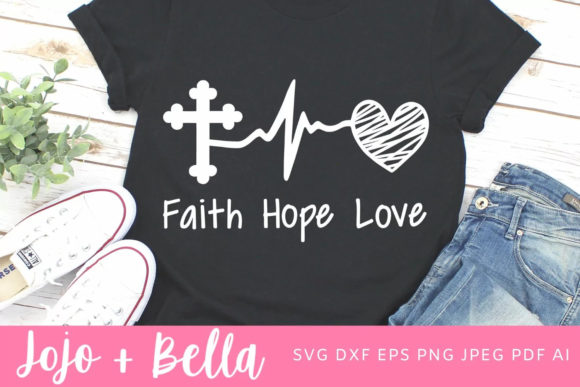
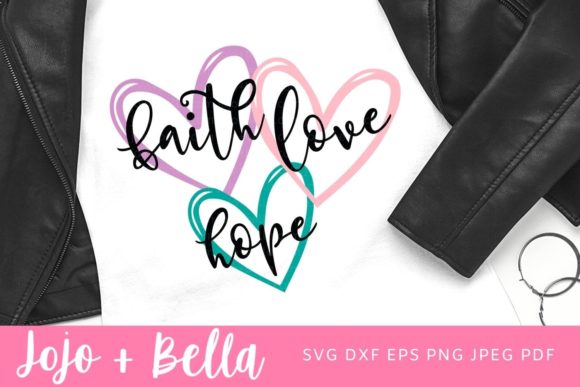
Faith Hope Love SVG refers to a vector file that contains a sentiment-based design built around the phrase “Faith, Hope, Love.” In many designs, this phrase is styled into a cohesive typographic composition, often with decorative elements like florals, crosses, or abstract shapes. Heart SVG is a standalone vector shape of a heart, frequently used as a design element to combine with text or other icons. Faith SV may be a shorter notation for a “Faith” SVG file, typically a single-word design, or it could be part of a naming schema used by certain marketplace sellers. Regardless of the exact label, these assets serve as building blocks for projects that require a spiritual, inspirational, or romantic theme.
Where they originate matters for your workflow. Many creators purchase these SVGs from marketplaces like Etsy, Creative Market, or Design Bundles. Others generate them through vector software such as Adobe Illustrator or Inkscape. Some are created using drag-and-drop builders paired with SVG export plugins. The source file usually comes as a zipped folder containing multiple formats – SVG, DXF, PNG, EPS – to cover different use cases like cutting machines, print graphics, or web display. Knowing the source helps you plan how you will test, sanitize, and store the files before integrating them into any project.
Planning Your Project Around These SVG Assets
Before you open a design software or load a machine with material, take time to place Faith Hope Love SVG, Heart SVG, and Faith SV within the larger scope of your task. For example, if you are a T-shirt designer preparing a seasonal line, these assets might form the core graphic for several variations. But the exact same SVG can behave differently across platforms. If you are creating a static image for Instagram, the SVG can be used directly or converted to PNG. If you are cutting vinyl or heat transfer material, you need to verify that the SVG layers are properly structured, with paths that are closed and without overlapping lines.
Create a checklist before you insert an SVG into your workspace:
- Confirm the SVG version – SVG 1.1 is widely supported, but some cutting machines require simplified paths.
- Check the scale – if the file defaults to a very small or large artboard, adjust to your target dimensions early.
- Inspect colors – if you use a multitool workflow, you may need to separate colors into distinct layers.
- Test the file in your primary application – whether that is Cricut Design Space, Silhouette Studio, Illustrator, or a vector editor like Affinity Designer.
This preparation stage reduces rework during production. If you skip it, you might end up with a Heart SVG that splits into unwanted pieces on the cutting mat or a Faith Hope Love SVG that renders with missing strokes because the font used was not embedded or converted to outlines. Building these checks into your routine – even for assets you think you know well – saves time and material.
Integrating the SVGs into Your Creative Process
During the actual design or production phase, Faith Hope Love SVG, Heart SVG, and Faith SV become interchangeable components that you can mix, resize, recolor, and combine. A common workflow involves combining the three into a layered composition. For instance, you might place the Heart SVG behind the Faith Hope Love text to create a framed look, then scale Faith SV to use as a secondary element on a sleeve or tag. Because SVGs are mathematically defined, scaling them does not degrade quality. This is especially valuable when you need to go from a small decal to a large banner without redrawing.
Layering and grouping should be handled deliberately. In vector software, you can reorder objects, group related elements, and apply stroke or fill changes to the entire selection. When you receive an SVG file from a third party, however, it might come as a single flattened path. In that case, you may need to use the “Ungroup” or “Release Compound Path” commands to isolate the Heart SVG from the text. This action also lets you apply separate colors – perhaps metallic gold for the heart and matte black for the text.
For users who rely on cutting machines, the SVG file must be compatible with the machine’s native software. Cricut Design Space, for example, reads SVGs but can behave differently when two paths overlap. To avoid cut errors, convert the text to outlines before exporting your final SVG. That way, Faith Hope Love SVG becomes a set of pure shapes, independent of fonts. If you share the file with clients or collaborators, outline conversion also preserves the design when they open it on a system missing certain fonts.
Real-World Implementation Examples
Small business owners in the home décor niche frequently use Faith Hope Love SVG as the centerpiece of framed wall art. They export the design as an SVG for the laser engraver, then repurpose the same file as a high-resolution PNG for the product listing photos. The Heart SVG might be used separately for add-on items like coasters or throw pillows. Meanwhile, Faith SV works well as a small watermark or accent on business cards and packaging. The key is to maintain a single source file and derive all output formats from that primary SVG – not by creating separate originals.
Bloggers and social media content creators also benefit. Suppose you produce weekly devotionals or wellness posts. You can import Faith Hope Love SVG into a template in Canva, overlay it on a photo, and export as JPG. If you use a different asset like Heart SVG in the same template, ensure that your SVG library follows a consistent naming convention so that you can find the right file quickly. A workflow like this reduces time per post and keeps your visual brand cohesive.
For educators and students working on digital portfolios or semester projects, these SVG files can be used as examples of typographic composition or vector design. Instead of starting from scratch, they can deconstruct a prepared SVG to understand how layers, gradients, and path outlines are constructed. Learning by examining a well-made Faith Hope Love SVG can sharpen skills in node editing, alignments, and grouping.
Organization and Quality Control for Long-Term Use
One of the most overlooked aspects of using SVG assets is file management. Over time, you accumulate dozens or even hundreds of Faith Hope Love variations, heart shapes, and individual word SVGs. Without a system, you waste minutes per project just hunting for the right file. Set up a folder structure that separates assets by theme, by project, or by output type. For instance:
- Master SVGs – original, unaltered files from your source.
- Working SVGs – files modified for specific machines or software.
- Output SVGs – final, production-ready copies with converted outlines and flattened layers.
Keep a simple spreadsheet or database that records the file name, source, key features (e.g., “includes heart, black/white, layered”), and intended use (vinyl, print, web). This might sound administrative, but when you are preparing for a holiday sale and need to reuse last year’s Faith Hope Love design, good organization becomes a direct productivity lever.
Quality control extends beyond file naming. If you run a print shop or a cutting business, test each SVG on scrap material before moving to stock. Check for missing cut lines, tiny float pieces that will wander off the paper, or text that looks disconnected because the letters were too thin. For Faith Hope Love SVG, pay special attention to the spaces between words – sometimes the kerning is tight and leads to a merged cut. Adjust path widths or add a small offset if necessary.
Compatibility with Platforms and Tools
The SVG format is widely supported, but each platform interprets the code slightly differently. In an e-commerce context, many platforms like Shopify or Etsy accept SVG for product mockups, but they will not render them in the browser unless the files are clean. Strip unnecessary metadata and ensure your SVG does not include external images or scripts. A clean Faith Hope Love SVG should contain only the markup needed to display the vector – no extraneous tags.
When you use a tool like Adobe Illustrator, you can save SVGs with different profiles: SVG 1.1, SVG Tiny, or responsive viewBox. For general use, SVG 1.1 with responsive settings works well across web and print. For cutting machines like Silhouette, you may need to flatten the design and save as an SVG with the correct DPI (96 is standard for screen; 300 for many cutters). It is worth creating a short preset in your vector software that matches the output device, so you do not have to reconfigure settings every time.
Making the Assets Work for Your Personal or Business Goals
Finally, think about how Faith Hope Love SVG, Heart SVG, and Faith SV fit into a broader content or product strategy rather than a one-off project. If you sell greeting cards, these SVGs can form the backbone of a product line that includes multiple sentiments in a consistent style. If you are a marketer building a brand around positivity and faith, these vectors become reusable visuals for emails, landing pages, and giveaway graphics. Instead of treating them as isolated downloads, integrate them into a master library that grows with each new release or purchase.
Set aside a small block of time each month to review your SVG assets. Delete duplicates, update file names to a consistent convention, and re-test any files that have not been used in a while. This practice keeps your archive reliable and prevents surprises when you return to an old design. Whether you work alone or with a small team, clear file hygiene around Faith Hope Love SVG and similar assets directly improves turnaround speed and output consistency.
By treating these vector graphics as components of a larger production system rather than one-time artwork, you gain efficiency, reduce errors, and can scale your creative output without scaling your effort. That is the practical value of knowing not just how to download an SVG, but how to make it work seamlessly inside your own process.