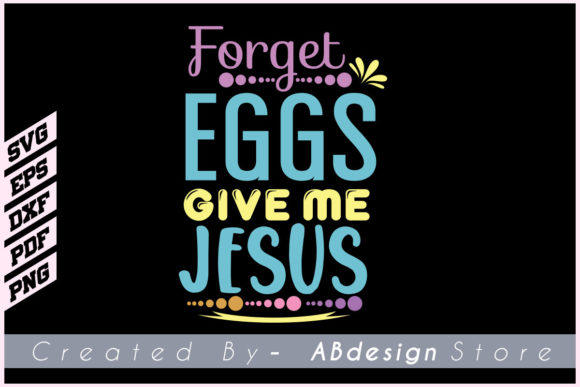
Easter Day Design SVG T Shirt Awesome: How to Streamline Your Seasonal Apparel Workflow
Creating seasonal apparel that resonates with customers requires more than a good idea. It demands a repeatable process, reliable assets, and a clear understanding of how each piece fits into your production pipeline. If you have been exploring Easter Day design SVG T shirt awesome concepts, you are likely looking for a way to blend festive aesthetics with practical, scalable output. This article breaks down what makes a strong Easter SVG design for t-shirts, where it fits into your workflow, and how you can use it effectively whether you are a solo creator or managing a small business.
What Makes an Easter Day SVG Design Work for T-Shirts
An SVG (Scalable Vector Graphic) file is essentially a set of mathematical instructions that define shapes, lines, and colors. Unlike raster images, SVGs scale infinitely without losing quality. When you are producing t-shirts, this matters a great deal because your design might appear on a small pocket print, a full-front graphic, or an oversized back print. The same SVG file can be resized without rework, saving you time and preserving consistency across sizes.
The phrase Easter Day design SVG T shirt awesome captures the ideal outcome: a vector file that is themed around Easter, optimized for garment decoration, and visually compelling enough to attract buyers. The best designs typically include clean lines, limited color layers (to keep printing costs low), and a clear focal point—whether that is an abstract egg pattern, a stylized bunny, or a typographic treatment of Easter greetings. The “awesome” part comes from how well the design translates from screen to fabric, which depends on your preparation and file handling.
Where Easter SVG T-Shirt Designs Fit in a Broader Workflow
If you are a print-on-demand seller, a small apparel brand, or a hobbyist who creates custom shirts for friends and family, SVG files are part of a larger sequence that includes concept development, production, and fulfillment. Understanding where the design stage sits helps you make better decisions earlier.
Before Production: Planning and Asset Preparation
Before you even open your design software, you need to decide on the production method. Direct-to-garment (DTG) printing, screen printing, and heat transfer vinyl all handle SVGs differently. For DTG, a single-layer SVG with transparent backgrounds works perfectly. For screen printing, you will want to separate colors into distinct layers, which SVGs allow you to do cleanly. Knowing your output method before you finalize the Easter Day design SVG T shirt awesome file prevents costly rework.
This is also the stage where you gather complementary assets. If you plan to use the same Easter design on hoodies, toddler tees, and tote bags, the SVG format lets you scale the graphic without redrawing it. Keep your base file organized with clearly named layers and grouped elements so you can quickly export variations for different products.
During Production: File Handling and Quality Control
Once you have your SVG ready, the next step is importing it into your production software or uploading it to your print provider. Most modern platforms—whether you use a home heat press or a third-party fulfillment service—accept SVG files directly. However, always check the color profile. SVGs can be saved with RGB or CMYK; for most garment printing, CMYK is preferred because it better represents how inks appear on fabric. If your Easter Day design SVG T shirt awesome file uses spot colors, confirm that the printer supports them or can approximate them with process colors.
Quality control at this stage means previewing the design at the actual print size. Because SVGs are resolution-independent, a preview in your design software might look crisp, but zooming to the physical dimensions on a mockup template reveals if any elements are too thin or too small. Text-based Easter designs often suffer here: a cheerful “Happy Easter” in a delicate script might become illegible at 3 inches wide. Use the SVG path data to check stroke widths and minimum detail size before sending the file to production.
After Production: Archiving and Future Use
A well-made SVG file is reusable year after year. After your Easter campaign ends, archive the final design along with any color variants. If you change your printing method next year, you can revisit the SVG and adjust layers without starting from scratch. Tag your files with relevant metadata—season, theme, color palette, and product type—so you can locate them quickly when the next Easter season approaches. This turns your Easter Day design SVG T shirt awesome from a one-off asset into a long-term resource.
For Small Business Owners and Entrepreneurs
If you run an apparel brand, your time is split between design, marketing, and operations. Using SVG files streamlines the handoff between you and your printer. When you commission a freelance designer, request the final files in SVG format with separated layers. This gives you flexibility to tweak colors or resize elements later without paying for revisions. For a limited Easter drop, test your Easter Day design SVG T shirt awesome on a small batch of samples first. Check how the colors look on different fabric blends—SVG colors can shift when printed on dark versus light garments, so adjust your file accordingly.
For Designers and Creatives
Working in SVG means you are building with vectors, not pixels. This allows you to apply consistent design rules, such as maintaining a minimum stroke width of 1.5 mm for all lines to ensure they survive printing. Use your SVG editor (like Illustrator, Inkscape, or Affinity Designer) to create reusable components—for example, a base egg shape that you can duplicate, rotate, and recolor for a pattern. Export the core Easter Day design SVG T shirt awesome file as the master, and then derive simplified versions for single-color prints or embroidered patches.
For Marketers and Content Creators
If you promote seasonal merchandise, your job is to show the design in context. Use mockup templates that accept SVG layers so you can present the same Easter t-shirt design on different models and backgrounds. This saves you from reshooting photos for every color variant. Also, because SVGs are small file sizes, you can embed them in digital previews or social media graphics without degradation. Just remember to convert the SVG to a PNG for platform uploads that do not support vector graphics.
How Easter SVG T-Shirt Designs Interact with Other Tools and Platforms
Your SVG file does not exist in isolation. It interacts with your design software, your print provider’s upload system, your e-commerce platform, and your inventory management. Here is how to make those interactions smoother.
- Design software: Keep your source file in a native format (like .ai or .afdesign) and export to SVG only when needed. This preserves layers and effects that SVGs may not support, such as gradients or drop shadows. For Easter Day design SVG T shirt awesome files, flatten complex effects into simple shapes before exporting to ensure compatibility.
- Print provider integration: Many print-on-demand services accept SVGs but impose file size limits. Optimize your SVG by removing unused paths and converting text to outlines. This prevents font substitution issues and reduces upload time. A typical Easter design with a bunny and eggs should be under 2 MB.
- Mockup tools: SVG files can be dragged directly into smart mockup templates. This is especially useful when you want to test how your Easter design looks on different shirt colors. Keep a template file handy with the design layer linked, so you can swap in new Easter Day design SVG T shirt awesome variations quickly.
- Inventory and product pages: When listing your t-shirt, the SVG file helps you generate consistent product images. Use the same vector source to create color variants, sizing charts, and lifestyle mockups. This visual consistency builds trust with buyers.
Long-Term Use and Organization of Easter SVG Assets
Easter is a recurring holiday, and a strong design can be refreshed annually with small tweaks. To make this efficient, build a file naming system that includes the year, theme, color count, and intended product. For example:
2025_Easter_Bunny_Greens_2color_TSHIRT.svg
This makes it easy to filter your archive when planning next year’s collection. Review your previous Easter Day design SVG T shirt awesome files before starting new designs. You might notice that last year’s pastel palette was popular, or that a specific rabbit motif performed well. Use that data to guide your next iteration.
Also consider building a library of modular SVG components: egg shapes, ribbon elements, floral accents, and text templates. By recombining these elements each year, you maintain brand consistency without creating every design from scratch. This modular approach turns an single awesome design into a scalable system for seasonal apparel.
Usability and Compatibility Considerations
Not all SVGs are created equal. A file that looks perfect in your browser might fail to render correctly in a printer’s RIP software. To avoid surprises, adopt these practices.
- Use standard SVG 1.1 features. Avoid exotic filters, complex clipping paths, or embedded raster images.
- Set your document units to inches or millimeters, not pixels, so dimensions are exact when imported into production software.
- Check that all text elements are converted to paths (outlines) before finalizing. This removes font dependency risks.
- Test your Easter Day design SVG T shirt awesome on a small run before full production. Note any color shifts, bleeding, or size discrepancies and adjust your source file accordingly.
Quality Control When Using SVG Files for T-Shirts
Quality in printed apparel is determined by how well the design holds up after multiple washes. While SVG files do not directly affect wash durability, the layers and colors you choose do. Designs with thick, solid areas of ink tend to crack less than fine lines. During the design phase, use the SVG path data to check that all elements have sufficient thickness. For an Easter design, that means ensuring bunny ears, egg outlines, and lettering are robust enough to survive wear and laundering. If you are printing on dark shirts, incorporate a white underbase layer in the SVG file structure so your printer knows how to handle it.
Finally, document your file setup. For every Easter Day design SVG T shirt awesome you produce, keep a notes file or spreadsheet detailing the production method, shirt color, ink colors, and any special instructions. This documentation becomes invaluable when you return to the design next season or hand it off to a partner.
By treating your Easter SVG design as part of a deliberate workflow rather than a standalone graphic, you gain efficiency, consistency, and the ability to scale your efforts year after year. The “awesome” in the phrase is not just about the visual result—it is about how smoothly the entire process runs from concept to customer.