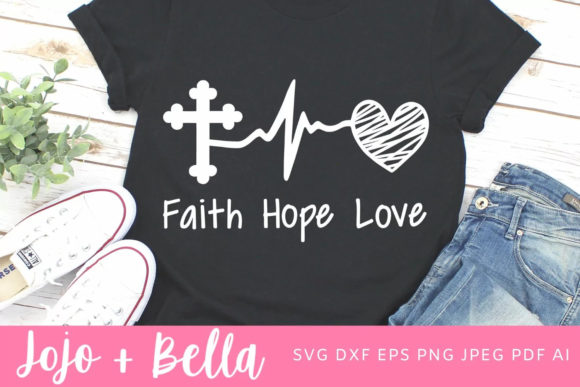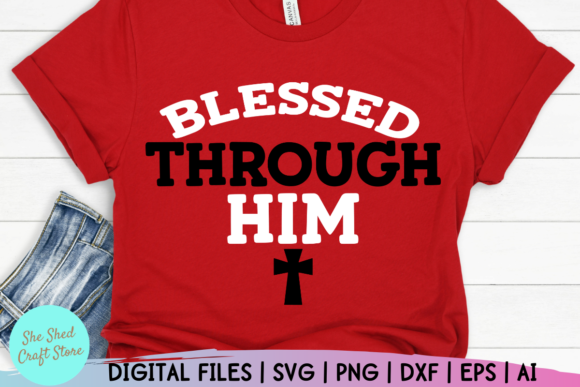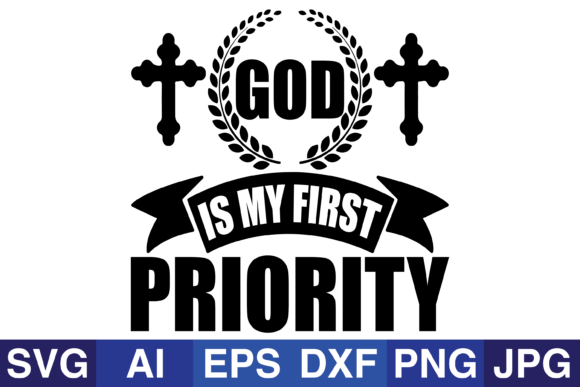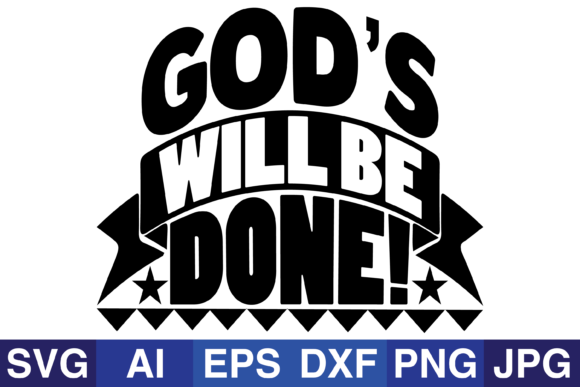
Choosing Between Faith SVG, Faith DXF, and Faith Printable Formats
When you begin searching for faith-based design resources, you will quickly encounter three common formats: Faith SVG, Faith DXF, and Faith Printable. Each serves a distinct purpose, and understanding the differences can save you time, frustration, and wasted materials. Whether you are creating custom gifts, decorating your home, or building a small creative business, the format you choose directly affects what you can make and how easily you can make it.
This article walks through the practical distinctions between these file types, when each shines, and what trade-offs to consider before downloading or purchasing your next faith-themed design.
What Each Format Actually Does
Before comparing, it helps to understand what each format is designed to do. Faith SVG files are scalable vector graphics. They store design information as mathematical paths rather than pixels, which means you can resize them infinitely without losing quality. This makes SVG the go-to format for cutting machines like Cricut and Silhouette, as well as for web use and scalable print projects.
Faith DXF files originated in the CAD world and are also vector-based. They are widely used for laser cutting, plasma cutting, and some embroidery machines. DXF files preserve precise geometric data, making them a strong choice when you need exact dimensions for physical fabrication.
Faith Printable files typically refer to PDF or high-resolution raster images intended for home or professional printing. These are not meant for cutting machines but are ideal for framing, card making, bullet journaling, or any project where the final output is ink on paper.
Where the Overlap Happens
Many design marketplaces bundle all three formats together. You might purchase a single faith-based design set that includes an SVG for your Cricut, a DXF for laser engraving, and a printable PDF for a wall art print. This bundling is convenient, but it also assumes you need all three. In practice, many creators only use one or two of these formats regularly, and understanding which ones match your workflow prevents you from overpaying for extra files you will never open.
Strengths and Trade-Offs of Faith SVG
Faith SVG files are the most versatile option for crafters who use electronic cutting machines. Because they are vector-based, you can scale a small cross design to fit a large vinyl decal without any pixelation. SVG files also support layers, colors, and grouping, which makes editing easier if you use design software like Inkscape, Adobe Illustrator, or Cricut Design Space.
However, SVG files are not always the best choice for every project. If you need to send a design to a laser cutter that only accepts DXF, an SVG will not work without conversion. Some older cutting machines also handle DXF more reliably than SVG, especially when dealing with complex curves. Additionally, SVG files can sometimes behave unpredictably across different software versions, so test a sample before committing to a large run.
For faith-themed projects like Bible verse decals, cross-shaped stencils, or layered paper art, Faith SVG files offer the best combination of scalability, editability, and cutting compatibility. They are especially strong for multi-layer designs where color separation matters.
Strengths and Trade-Offs of Faith DXF
Faith DXF files excel in precision fabrication environments. If you are using a laser engraver to create wooden crosses, acrylic ornaments, or leather bookmarks, DXF is often the preferred format because it preserves exact dimensions and clean path data. Many laser-cutting software suites import DXF more accurately than SVG, especially when the design includes fine details or tight curves.
The main limitation of DXF is that it does not support color in the same way SVG does. DXF files typically store only the vector outline, meaning you lose fill colors, gradients, and layer instructions. For faith-based designs that rely on multiple colors or shading, DXF may require extra work in your design software to recreate the intended look. Also, DXF files are less common in the scrapbooking and home crafting community, so you may find fewer pre-made faith designs in this format compared to SVG.
If your primary tool is a laser cutter or CNC machine, Faith DXF files are likely your best choice. For standard vinyl cutting or paper crafting, DXF is functional but often unnecessary unless your machine specifically requires it.
Strengths and Trade-Offs of Faith Printable
Faith Printable files are the simplest option in terms of compatibility. Any device can open a PDF or high-resolution JPEG, and any printer can produce a physical copy. This makes printable faith designs ideal for last-minute projects, gifts, or situations where you do not have access to a cutting machine. You can frame a printable scripture verse, use it as a coloring page, or include it in a handmade card.
The trade-off is that printable files are raster-based at a fixed resolution. If you enlarge a printable design beyond its intended size, you will see pixelation. They also cannot be used directly with cutting or engraving machines. A Faith Printable file is a finished product in itself, not a template for further fabrication.
Printables are a strong choice when you want a polished, ready-to-frame piece without additional equipment. They are also excellent for group settings, such as Sunday school activities or church events, where multiple copies need to be printed quickly.
Comparing Fit by Project Type
To help you choose, consider the specific project you have in mind.
- Vinyl decals for mugs, windows, or tumblers: Faith SVG is the best fit. It scales cleanly and cuts accurately on most home cutting machines.
- Laser-engraved wooden plaques or coasters: Faith DXF is typically preferred. The precise paths ensure clean burns and consistent depth.
- Framed wall art or greeting cards: Faith Printable files work perfectly. No cutting machine required, and the result is ready to display.
- Multi-layered paper crafts with color separation: Faith SVG again wins, as it preserves color layers and makes assembly straightforward.
- Embroidery or monogramming: This is a gray area. Some embroidery machines use DXF, while others prefer SVG or proprietary formats. Check your machine specifications before choosing.
When to Use Multiple Formats Together
There are situations where having more than one format is genuinely useful. For example, if you are producing a faith-themed gift set that includes a laser-engraved wood sign and a matching printable card, you might use a Faith DXF for the sign and a Faith Printable for the card. In this case, buying a bundle that includes both formats saves you the trouble of sourcing separate designs that may not match visually.
Similarly, if you sell digital products, offering Faith SVG, Faith DXF, and Faith Printable files in a single package increases your customer base because it accommodates different machines and preferences. This is why many designers bundle formats even though individual customers may only use one.
Decision Factors to Consider
When you are evaluating a faith design resource, ask yourself a few questions before deciding which format to invest in.
- What machine or tool will you use? If the answer is a cutting machine, start with SVG. If it is a laser engraver, start with DXF. If it is a printer, go with a printable file.
- Do you need to edit the design? SVG is the most editable. DXF can be edited but with less color control. Printables are generally fixed.
- How will the final project be used? For one-off gifts or personal use, a printable is often the simplest path. For production or repeated use, SVG or DXF give you more flexibility.
- What is your skill level with design software? If you are comfortable with vector software, SVG and DXF offer creative freedom. If you prefer a ready-to-use result, stick with printables.
Realistic Examples
Consider two different crafters. One makes custom faith-themed tumblers for a small Etsy shop. She uses a Cricut machine and applies vinyl decals. For her, Faith SVG files are essential. She needs clean cut lines, easy resizing, and the ability to adjust colors. DXF and printable files would not serve her workflow at all.
Another crafter builds wooden crosses and plaques for church fundraisers. He uses a laser cutter. For him, Faith DXF files are the most reliable. He needs precise vector paths that his laser software reads accurately. SVG files sometimes cause misalignment, and printables are useless for his process.
A third person simply wants to print a meaningful Bible verse to frame for their home office. They have no cutting machine and no interest in digital editing. For them, a Faith Printable file is the most direct and cost-effective solution. Buying an SVG or DXF bundle would add unnecessary complexity.
Making an Informed Choice
There is no universally superior format among Faith SVG, Faith DXF, and Faith Printable files. Each is optimized for a different set of tools and outcomes. The best choice depends entirely on your equipment, your project goals, and how much control you want over the final product.
If you are just starting out, consider trying one project in a single format before investing in multi-format bundles. Many designers offer free samples in SVG or printable formats, allowing you to test compatibility with your machine and software. This low-cost trial can clarify which format fits your natural workflow.
For more experienced creators, having access to all three formats in a single purchase can be a time-saver, especially if you produce multiple product types from the same design. Just be aware that you are paying for flexibility you may not fully use.
Ultimately, the right choice is the one that gets your faith-inspired project made with the least friction and the best result. Whether that means cutting an SVG on your Cricut, engraving a DXF on your laser, or printing a PDF for your wall, the format is simply a means to an end. Focus on the project itself, and let the file type serve your vision rather than dictate it.